How Do Ductless Mini Splits Work?
You have probably heard the term ductless mini split by now — from a neighbour, a contractor, or an ad for a home improvement service. Maybe someone mentioned it as a solution for your older Pittsburgh home, a room addition, or an attic space that never quite reaches a comfortable temperature.
But what actually is a ductless mini split? How does it work? And is it genuinely the right solution for your specific situation — or is it just a trend with a catchy name?
This guide answers those questions in plain language. No jargon, no sales pitch — just a clear explanation of how these systems operate, what makes them different from conventional HVAC, and why they have become one of the most practical comfort solutions available for Pittsburgh homes specifically.
What Is a Ductless Mini Split System?
A ductless mini split is a heating and cooling system that works without ductwork. That is the simplest way to describe it — and it is also the most important thing to understand about how it differs from a conventional central air conditioning or forced-air heating system.
A standard central HVAC system works by conditioning air in one central location — a furnace or air handler — and then distributing that conditioned air through a network of ducts that run through your walls, ceiling, and floors to reach every room in the house. The ductwork is what connects the central unit to the living spaces. Without it, a conventional system cannot function.
A ductless mini split removes the ductwork from the equation entirely. Instead of conditioning air centrally and distributing it through ducts, a mini split conditions the air directly in each room or zone where comfort is needed.
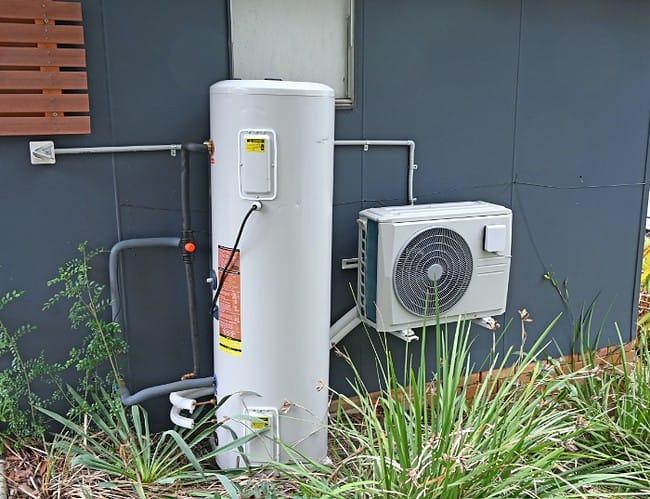
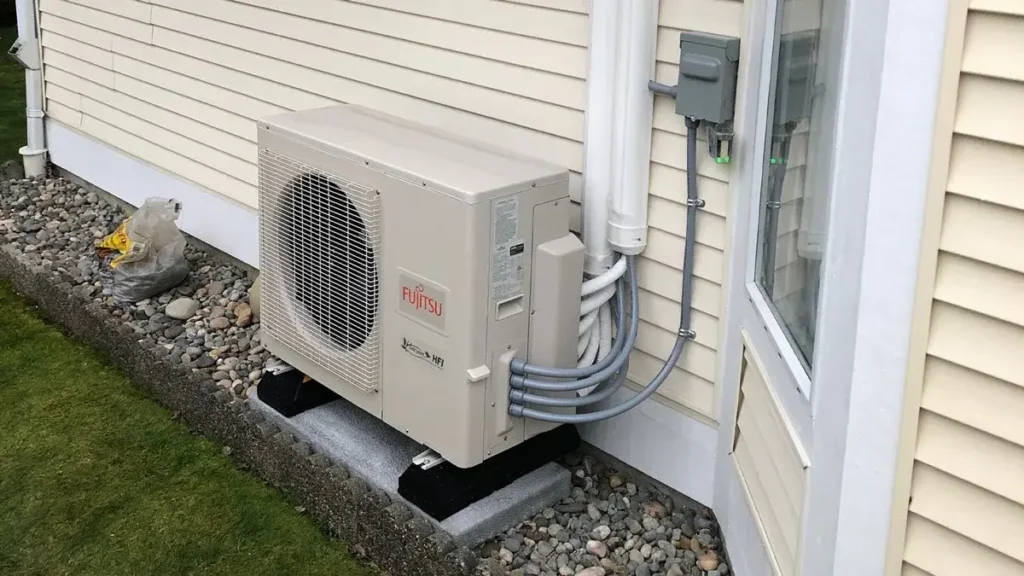
Every ductless system has two main components. The outdoor unit — which contains the compressor and handles the heat exchange process with outdoor air. And one or more indoor units — wall-mounted or ceiling-mounted air handlers that sit in the rooms you want to heat or cool and deliver conditioned air directly into that space.
The outdoor and indoor units are connected by a narrow set of lines — a refrigerant line, a power cable, and a condensate drain line — that run through a small hole in the wall, typically around three inches in diameter. That small penetration is the only structural modification required during installation. No ductwork. No major construction. In most cases the entire installation is complete in a single day.
How Ductless Systems Provide Both Heating and Cooling
This is the part that surprises many Pittsburgh homeowners when they first learn about ductless technology — these systems do not just cool. They provide both heating and cooling from the same unit, year-round, using heat pump technology.
Here is how the process works in plain terms.
In cooling mode, the indoor unit draws warm air from the room across a refrigerant-cooled coil. The refrigerant absorbs the heat from that air, carries it outside through the refrigerant line to the outdoor unit, and releases it into the outside air. The cooled air is then circulated back into the room. This is essentially the same process that a conventional air conditioner uses — just without the ductwork in between.
In heating mode, the process reverses. The outdoor unit extracts heat energy from the outside air — even cold outside air — and transfers it via the refrigerant to the indoor unit, where it is released into the room as warmth.
This is the part that feels counterintuitive to most people. Extracting heat from cold outdoor air sounds impossible — but the physics behind it is entirely sound. Air at any temperature above absolute zero contains heat energy. Modern cold-climate ductless systems are engineered to extract that energy efficiently even when outdoor temperatures drop well below freezing. Current cold-climate models maintain effective heating performance at temperatures as low as negative five degrees Fahrenheit — well below the range Pittsburgh winters typically reach.
The heat transfer approach is also significantly more energy-efficient than combustion-based heating. A furnace generates heat by burning fuel. A ductless heat pump moves existing heat from one place to another — a process that requires far less energy to accomplish, which is why ductless systems typically cost less to operate per unit of warmth produced than a conventional furnace at moderate outdoor temperatures.
Single Zone Versus Multi-Zone Systems
When Pittsburgh homeowners first explore ductless systems one of the first practical questions is whether they need a single zone or a multi-zone configuration. Understanding the difference makes the decision straightforward.
A single-zone system pairs one outdoor unit with one indoor unit. It conditions a single room or defined area — a bedroom, a home office, a converted attic, a sunroom, a finished basement, or a garage workshop. Single-zone systems are the simplest and most affordable ductless option and are the right choice when the goal is to add comfort to a specific space that currently has no heating or cooling.
A multi-zone system pairs one outdoor unit with two, three, four, or more indoor units installed in different rooms or areas of the home. Each indoor unit operates independently — meaning different rooms can be set to different temperatures simultaneously. One family member can have the bedroom cooler while another has the living room warmer. Both are served by the same outdoor compressor but controlled entirely independently.
Multi-zone systems are the right choice when several rooms need coverage, when a Pittsburgh homeowner wants to replace an entire central system with ductless, or when whole-home zone control is the goal. They require more careful design than single-zone installations — the outdoor compressor must be correctly sized for the total combined load of all indoor units — but the result is a level of whole-home comfort control that a single-thermostat central system simply cannot match.
Why Ductless Is Ideal for Pittsburgh’s Older Homes
Pittsburgh has a remarkable stock of older homes — properties built in the early to mid-twentieth century with thick plaster walls, original woodwork, and architectural character that makes them genuinely beautiful to live in. They were also built long before central air conditioning existed.
Adding traditional central air to these properties means running ductwork through walls and ceilings that were never designed to accommodate it. In many Pittsburgh homes this requires opening finished walls, cutting through plaster, and making structural modifications that are expensive, disruptive, and in some cases genuinely damaging to the home’s original character.
A ductless mini split solves this problem cleanly. The three-inch penetration needed to connect the indoor and outdoor units causes minimal disruption to existing walls and finishes. No ductwork is designed, no major structural modifications are required, and the home’s original character remains intact. Installation is typically completed in a single day with no ongoing disruption.
Pittsburgh’s older homes also frequently have rooms that existing HVAC systems never reached adequately — third-floor spaces, converted attics, finished basements, and additions built onto properties where the original heating and cooling system was never extended to cover the new space. A single-zone ductless unit in any of these spaces resolves the comfort problem permanently without touching the rest of the home’s HVAC infrastructure.
For Pittsburgh homeowners with boiler heating — which covers a significant proportion of the city’s older neighbourhoods — ductless mini splits solve the cooling side of the equation entirely. A boiler heats the home beautifully but provides no cooling capability. A ductless system added to a boiler-heated home delivers summer cooling and supplemental heating for individual zones without requiring any modification to the existing boiler system.
Is a Ductless Mini Split Right for Your Pittsburgh Home?
Ductless systems are genuinely well-suited to a wide range of Pittsburgh homes and situations — but they are not automatically the right answer for every property or every need. Here is a straightforward way to think about whether a ductless system makes sense for your specific situation.
A ductless system is very likely the right choice if your Pittsburgh home has no existing ductwork and you want to add cooling or supplemental heating. It is also a strong choice if you have a specific room or zone that lacks adequate comfort coverage from your existing HVAC system — a converted attic, a room addition, a home office, or a basement that your central system never adequately reaches.
It is worth exploring ductless as a whole-home solution if your existing central system is aging and approaching replacement, and you want the comfort control and efficiency advantages that zone-specific ductless coverage provides.
The most important thing to get right is system sizing and indoor unit placement. A ductless unit that is incorrectly sized for its space, or positioned in a location that does not allow for even airflow across the room, will not deliver the comfort results a correctly designed system achieves. This is why a professional assessment before installation is always worth the time — it ensures the system your Pittsburgh home gets is the one that genuinely fits.
Our Pittsburgh ductless team provides free in-home assessments and honest guidance on whether a single-zone or multi-zone system is the right fit for your specific property and comfort goals — with no obligation to proceed.